
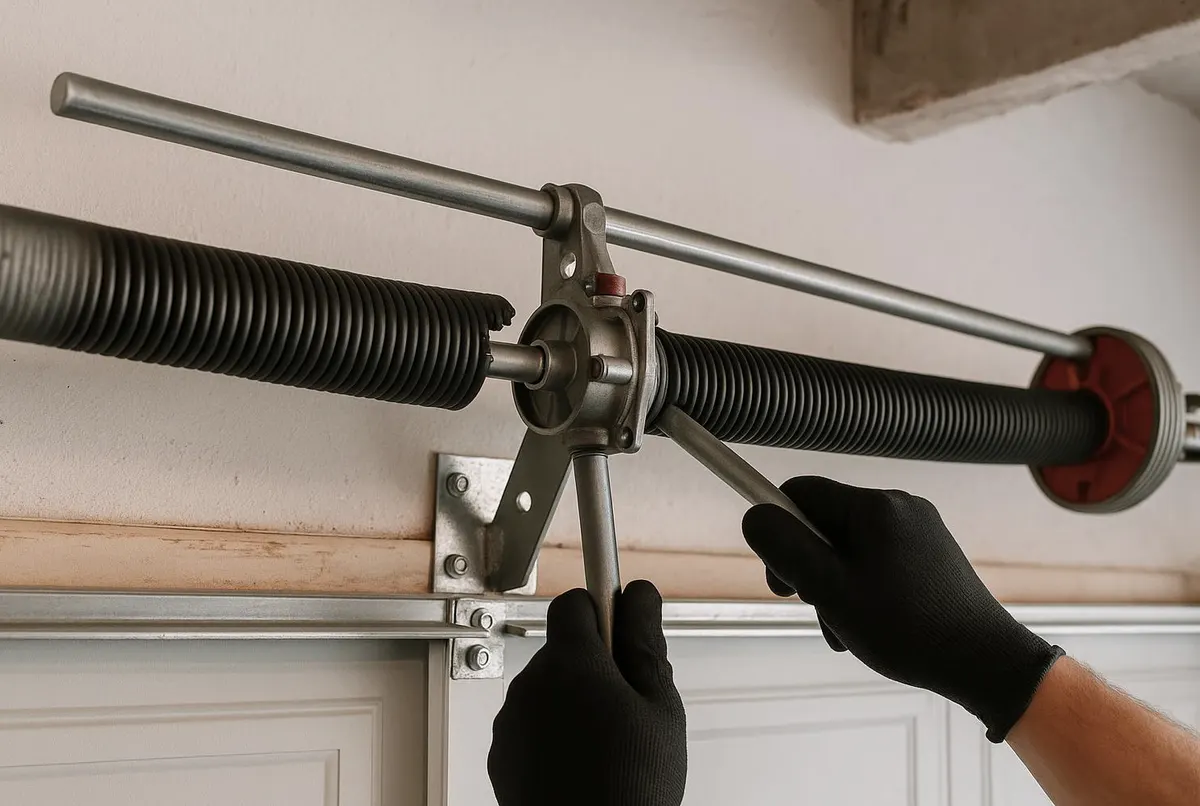
Get your garage door winter-ready before the first hard freeze
The short answer: test the door's balance, swap out cracked weatherstripping, lubricate every moving part, check the safety sensors, and have a technician look at the springs if they're more than a few years old. Do this in late fall, before the first real cold snap, and you avoid the two things that take garage doors down every winter here: a cracked seal letting in wind and water, and a spring that snaps in the cold because it was already weakened.
Why this matters more in this part of New Jersey
Winters here aren't just cold, they cycle. A nor'easter dumps snow and ice, the sun comes out and melts some of it, meltwater runs under the door and refreezes overnight, and that freeze-thaw pattern repeats for weeks. Road salt gets tracked into garages on tires and boots, and that salt is corrosive to springs, tracks, and hinges. Add in the older housing stock common around here — original steel doors from decades back, aging torsion springs, weatherstripping that's hardened and cracked — and you've got a setup where small problems turn into stuck or broken doors right when you need the garage most.
A real fall maintenance checklist
Replace the weatherstripping before it fails, not after
The rubber seal along the bottom of the door and the vinyl strips along the sides are your first defense against wind-driven snow and meltwater. If the bottom seal is flattened, cracked, or has gaps where you can see daylight, it won't hold back slush and ice melt this winter. Replacement kits are inexpensive and most homeowners can install one in under an hour; just measure the track width before buying.
Lubricate hinges, rollers, and the torsion spring
Cold makes steel contract and grease stiffen, which is why doors that ran fine in September start grinding or sticking in January. Use a silicone or lithium-based garage door lubricant (not WD-40, which washes away and attracts grit) on the hinges, roller bearings, and the torsion spring itself. Do this now, then again partway through winter if you notice any new noise.
Test the balance
Disconnect the opener by pulling the release cord, then lift the door halfway by hand. It should stay in place on its own. If it drifts down or shoots up, the springs are out of balance and working harder than they should — a problem that gets worse, not better, in cold weather, since cold steel is more brittle and under more strain.
Have the springs inspected if they're aging
Torsion springs are rated for a set number of open-close cycles, typically somewhere in the tens of thousands for standard residential springs, and they weaken with age and rust. Cold weather is when a borderline spring actually snaps, because the metal is less flexible and the door gets opened and closed more often for holiday traffic, deliveries, and snow-clearing trips. If your springs are original to an older house, or the door has been working harder to open lately, fall is the time to get that checked, not February.
Check the opener and the safety sensors
Cold snaps are hard on garage door opener motors and on the photo-eye safety sensors mounted near the floor on each track. Road salt and grime kick up from tires and can coat the sensor lenses, which causes the door to reverse unexpectedly or refuse to close. Wipe both sensors clean, make sure they're aligned, and test that the door reverses properly when something blocks the beam. If the opener has been chattering, reversing without cause, or responding slowly to the remote, fix it now rather than during a storm.
Think about insulation if the garage connects to living space
Many homes in this area have original, uninsulated steel doors that do very little to block cold. If pipes run through the garage, or the space is attached to the house, an insulated door or a retrofit insulation kit can cut down on heat loss and reduce the odds of frozen pipes during a hard freeze. This is a bigger project than a fall tune-up, but worth planning if your current door is original to the house.
What older homes around here need extra attention
Original doors on older houses in this area often have outdated tracks, single-layer panels, and hardware that's seen forty or more winters of salt and freeze-thaw cycling. Surface rust on hinges and tracks isn't just cosmetic — it changes how smoothly the door rides and adds friction that strains the opener and springs. If you're seeing rust streaks, flaking paint, or a door that's noticeably heavier to lift than it used to be, that's the cold-weather failure point to watch.
When to call Mt Laurel Township Garage Door
If the balance test fails, if you hear a loud bang or see a gap in a coiled spring, or if the opener is reversing or refusing to close on its own, stop using the door and call rather than troubleshooting further — a spring under tension or a malfunctioning opener can cause real injury. We handle spring replacement and garage door opener repair across Burlington County, and we also run a full garage door maintenance visit that covers lubrication, balance adjustment, hardware tightening, and sensor alignment in one trip, so the door is actually ready before the next nor'easter rolls through. Whether you're looking for a garage door company near Centerton Rd Mt Laurel or garage door service in Burlington County NJ, that's exactly the kind of visit we run all fall.
Call Mt Laurel Township Garage Door today to schedule a pre-winter inspection and keep your garage door working through whatever this winter brings.